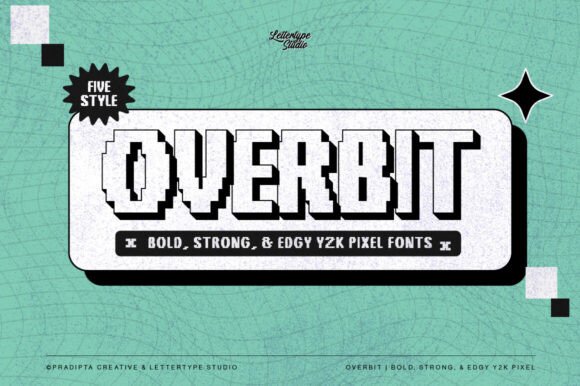
Overbit: The Pixel Font That Feels Like a High-Score
You know the feeling. You’re scrolling through endless font libraries, looking for that one typeface that doesn’t just say words, but shouts them with a specific kind of energy. Something that feels both retro and surprisingly fresh. That’s where Overbit enters the scene. It’s not just another pixel font; it’s a time machine with a design degree, blending the gritty charm of 80s arcades with the slick, bold aesthetics of Y2K graphics. If your project needs a voice that’s confident, playful, and unmistakably edgy, you’ve probably just found your new favorite design asset.
More Than Nostalgia: A Visual Powerhouse for Modern Projects
Let’s be clear: Overbit isn’t about slapping some chunky pixels on a screen and calling it retro. It’s a carefully crafted display font that understands visual weight. Each letterform is built with intention, creating a strong, impactful presence that works just as well on a billboard as it does on a mobile screen. The beauty lies in its versatility. Need a clean, solid look for a logo? The regular style delivers. Want to add depth for a poster or headline? The shadow and shadow bold options create that instant 3D effect that pops. For a more refined touch, the outline style offers a sleek, architectural feel, while the italic brings a dynamic, forward-moving energy.
This isn’t a font that whispers. It’s designed to grab attention, which makes it a secret weapon for brands trying to stand out in crowded digital spaces. Think about a tech startup wanting to bridge the gap between innovative and approachable, or a gaming blog that needs to signal its niche instantly. Overbit does that heavy lifting for you, establishing a clear visual personality before a single word is read. It’s a prime example of a creative font that serves a strategic purpose, helping to build immediate brand recognition through a distinct and memorable aesthetic.
Where Overbit Truly Shines: Practical Applications
Theory is nice, but where does a font like this actually work in the wild? The applications are surprisingly broad. For logo design, Overbit provides a foundation that’s both strong and characterful. It’s perfect for brands in tech, gaming, entertainment, or any field wanting to project confidence with a creative edge. Imagine a podcast logo or a YouTube channel header—it instantly communicates the content’s vibe.
In packaging design, especially for products targeting a younger, trend-aware audience, Overbit can make labels and boxes jump off the shelf. Think about snack foods, energy drinks, or even boutique tech accessories. On social media, it’s a game-changer. Use it for bold headlines in Instagram graphics, eye-catching thumbnails for video content, or impactful quotes in carousel posts. Its pixel-perfect clarity ensures it remains readable even when scaled down for a feed.
For web design, it can be used strategically for hero sections, navigation menus, or call-to-action buttons where you want to inject personality without sacrificing function. In editorial layouts, a chapter title or pull quote set in Overbit can break the monotony of body text and guide the reader’s eye. It’s equally at home on physical merchandise—think t-shirts, mugs, or stickers—where its bold structure translates beautifully to print.
Choosing Your Style and Making It Work
With five distinct styles, the first practical step is picking the right one for your goal. The regular style is your workhorse—clean, strong, and highly versatile for most applications where readability is paramount. The outline style is fantastic for creating layered designs; imagine it over a solid color block or a subtle texture. It feels more technical and graphic, great for interfaces or infographics.
The shadow and shadow bold styles are your tools for adding dimension. They’re ideal for creating a retro video game title screen effect or for making a headline on a poster feel tactile and engaging. Use the shadow bold for maximum impact. The italic isn’t just a slanted version; it’s reworked to maintain its pixel integrity while conveying motion and urgency, perfect for sales banners or dynamic quotes.
A crucial piece of advice: font pairing. A display font like Overbit needs a partner. For body text, pair it with a highly legible sans serif font or even a simple serif font. The contrast between Overbit’s structured, decorative nature and a clean, modern typeface for paragraphs creates a balanced hierarchy that’s easy on the eyes. Never use it for long blocks of small text; its strength is in headlines, logos, and short bursts of impactful copy.
The Professional Edge: From Hobby to Business
For designers and entrepreneurs, the practical considerations go beyond aesthetics. One of the biggest advantages of a premium font like Overbit is the commercial licensing. It’s built for professional use, meaning you can confidently use it in client projects, for your own business branding, and on products for sale without the legal headaches that can come with free font sites. This peace of mind is a significant part of its value as a design asset.
It also supports multilingual characters, which is a non-negotiable for brands with an international audience. This thoughtful detail shows the font was created with real-world commercial use in mind. Furthermore, its performance at both large and small sizes ensures your brand identity remains consistent across a website favicon, a social media avatar, and a large-format print ad. That kind of visual consistency is what separates amateur projects from professional brands.
So, whether you’re a small business owner crafting your first logo, a content creator looking to elevate your channel’s graphics, or a designer building a brand identity system for a client, Overbit offers more than just a cool look. It provides a strategic tool for communication. It’s a typeface that understands the assignment: be bold, be memorable, and work hard across every touchpoint. In a world of safe choices, it’s a confident step into a more dynamic and engaging visual conversation.